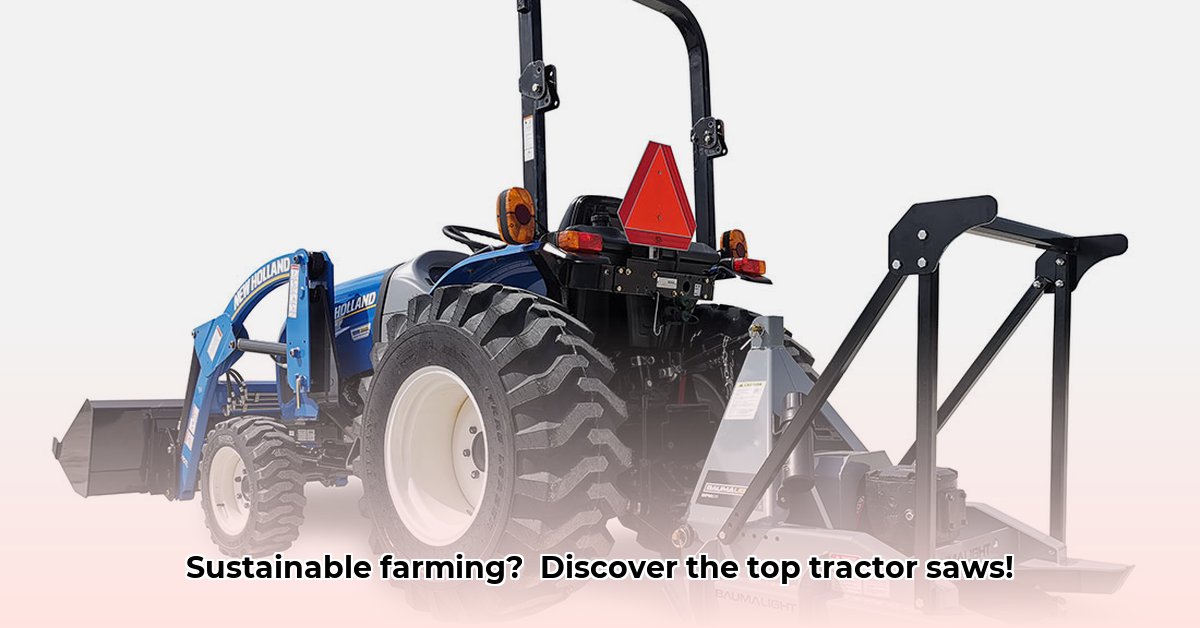
Tractor Saw Showdown: TR-3400 vs. TTS12-3PT
Sustainable land management often necessitates efficient and environmentally conscious land clearing. Tractor-mounted tree saws offer a powerful solution, but choosing the right model is crucial. This comparative review analyzes two leading contenders: the TR-3400 and the TTS12-3PT, focusing on their suitability for sustainable agricultural practices. We'll examine power, performance, maintenance, and environmental considerations to help you make an informed decision.
Power, Performance, and Practicality: A Side-by-Side Comparison
Both the TR-3400 and the TTS12-3PT are designed for tractors with a minimum of 28-30 horsepower (HP) – sufficient power for most clearing tasks. Both utilize durable carbide teeth for clean, efficient cuts. However, key differences in design and functionality distinguish these models.
The TR-3400 emphasizes speed and longevity, boasting a manufacturer-claimed lifespan of up to 500 hours of continuous cutting. This makes it suitable for large-scale operations or extensive clearing projects. However, the maximum tree diameter it can handle remains unspecified, limiting its applicability for some farms.
Conversely, the TTS12-3PT prioritizes user-friendliness and versatility. Its design accommodates trees up to 24 inches in diameter, making it ideal for diverse tree sizes and brush clearing. The simple rivet system for tooth replacement minimizes downtime and potentially reduces maintenance costs. Conversely, the manufacturer does not provide data on its overall lifespan.
Here's a summary of their key features:
| Feature | TR-3400 | TTS12-3PT |
|---|---|---|
| Required Tractor Power | Minimum 28-30 HP | Minimum 28-30 HP |
| Blade Material | Carbide Teeth | Carbide Teeth |
| Estimated Lifespan | Up to 500 hours | Unspecified |
| Max. Cutting Diameter | Unspecified | 24 inches |
| Tooth Replacement | Replaceable carbide teeth (method unspecified) | Simple rivet system for easy replacement |
Is a longer lifespan always better? This rhetorical question highlights the need to consider the overall cost of ownership, including the cost of replacement teeth and labor.
Choosing the Right Saw: Key Decision Factors
Selecting the optimal tractor saw demands careful consideration of various factors beyond raw power. Your specific farming operation and priorities will guide your decision. Consider these points:
Tree Size: For primarily smaller trees and brush, the TTS12-3PT's 24-inch capacity is likely sufficient. Larger trees necessitate further investigation into the TR-3400's unstated capacity limitations.
Frequency of Use: Occasional use might favor the TTS12-3PT's easier maintenance, potentially offsetting any shorter lifespan. Frequent use might justify the TR-3400's prolonged operational life.
Budget: The initial cost and ongoing maintenance expenses must be factored into the decision, considering the potential long-term cost savings from a longer-lasting saw.
Labor Costs: The ease of tooth replacement on the TTS12-3PT could translate into substantial savings on labor costs over its operational lifetime. This is a quantifiable factor impacting the overall economic efficiency.
Sustainability Beyond Cutting Power: Environmental Considerations
Sustainable farming emphasizes environmental responsibility. Unfortunately, neither manufacturer provides detailed information on noise levels, fuel consumption, or the environmental impact of blade disposal. This lack of transparency highlights a need for improved industry standards and greater manufacturer disclosure regarding the environmental footprint of their products.
The Final Verdict: Informed Decision-Making
Selecting a tractor saw involves a substantial investment. A thorough evaluation of your needs, combined with a careful comparison of the TR-3400 and TTS12-3PT based on the factors discussed above, is essential. Directly contacting manufacturers to clarify unspecified details (such as maximum cutting diameter and lifespan for both models) is strongly recommended. This will help ensure that you choose the most efficient and sustainable tool for your farm's long-term success. A well-informed choice will yield significant returns for years to come.